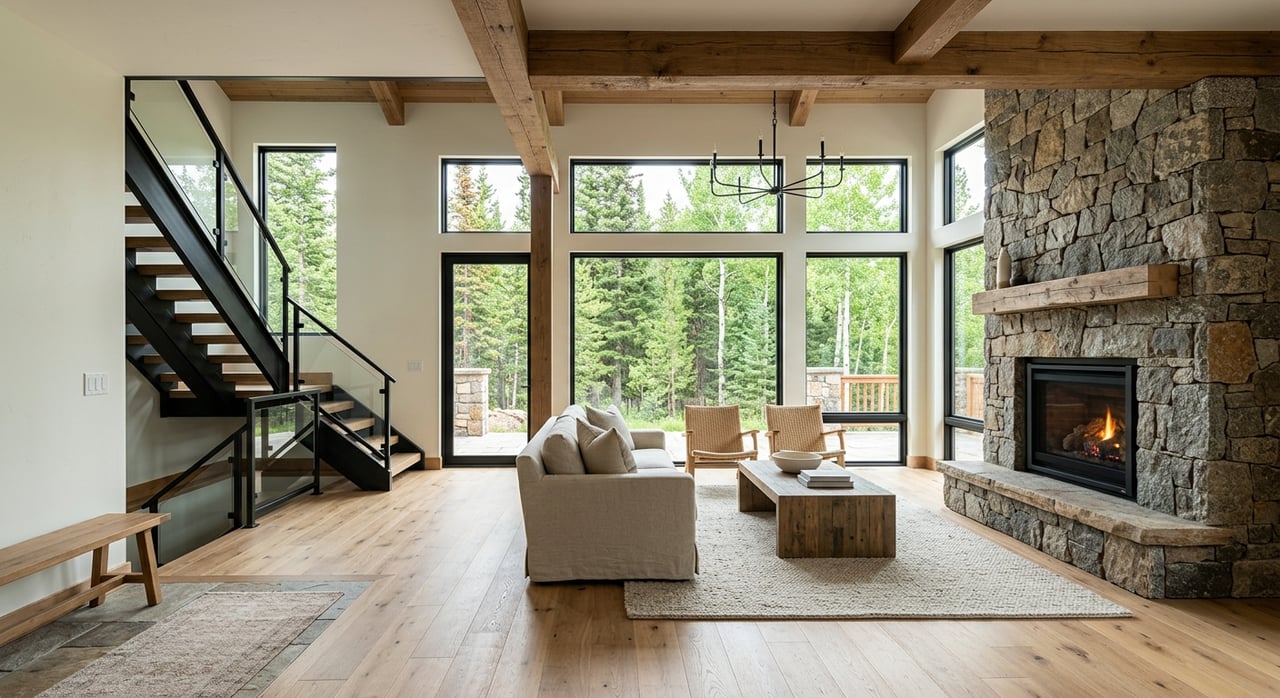
Building Versus Buying A Home In Stagecoach
Thinking about Stagecoach often starts with a simple dream: more space, mountain views, and easy access to the reservoir and trails. But once you start looking seriously, one big question usually follows. Should you buy a finished home, or build one from the ground up? In Stagecoach, that choice can affect your timeline, your budget, and how much complexity you take on, so it helps to understand the local reality before you decide. Let’s dive in.
Stagecoach is not a fully built-out neighborhood where every lot has the same services and the same path to construction. It is a rural community in Routt County centered around Stagecoach Reservoir and Stagecoach State Park, with a mix of existing homes, newer subdivisions, and many vacant residential lots. That mix is what makes the build-versus-buy decision here more nuanced than in a more finished community.
The local planning picture matters. Routt County's Stagecoach Community Plan describes Stagecoach as a mixed residential and recreation landscape, with several hundred vacant lots still in the area. It also points out that some parts of Stagecoach, especially the North Area, are more service-ready than others.
If your main goal is to start using the property sooner, buying an existing home or townhome usually offers the simpler path. In many cases, you are stepping into a property with a completed structure and an established utility setup rather than starting from raw land. That can reduce the number of approvals and infrastructure questions you need to solve before move-in.
This tends to be especially true in Stagecoach's North Area. According to the community plan, that part of Stagecoach includes improved roads, electricity, and central water and sewer in newer subdivisions such as Young's Peak and Red Hawk Village. The plan also notes that existing multifamily housing is in the North Area, which can make it a practical starting point if you want a finished property.
Buying can also be a lifestyle choice, not just a logistical one. Stagecoach State Park describes the reservoir as 820 acres and highlights year-round recreation including boating, fishing, hiking, winter activities, loaner gear, and summer marina rentals. If you want to enjoy that access right away, a move-in-ready home may fit better than a lot that will take months to develop.
Building can make sense if you care most about designing a home around your exact priorities. You may want a specific homesite, a certain orientation, more privacy, or a custom floor plan that is hard to find in existing inventory. In a market like Stagecoach, that flexibility can be appealing.
That said, building here is rarely as simple as buying a lot and starting construction. The local process can involve county review, utility district coordination, and in many cases HOA architectural review. Your experience will depend heavily on the parcel, the road access, and whether the lot already has central water and sewer available.
Routt County requires permit applications and plans to be submitted electronically through CityView. The county says new construction or additions can take up to 10 working days for the initial review, while resubmittals can take 5 to 7 business days. That is just the review timing, not the full construction timeline.
For new construction, the county's submittal list can include:
On some projects, the review stack extends well beyond one office. Routt County's Stagecoach Mountain Ranch review page shows that larger Stagecoach proposals may be routed to internal reviewers such as Building, Environmental Health, and Road & Bridge, along with external reviewers including Morrison Creek Water & Sanitation District, Upper Yampa Water Conservancy District, Oak Creek Fire, Colorado Parks and Wildlife, Stagecoach State Park, CDOT, and CDPHE. Even if your project is much smaller, that example shows how infrastructure, access, and public agency coordination remain part of the Stagecoach development environment.
One of the biggest build-versus-buy questions in Stagecoach is whether the lot is served by central water and sewer. That single factor can affect cost, timeline, and overall complexity.
For lots with central water and sewer service, Morrison Creek Metropolitan Water & Sanitation District says the process starts with SPOA Architectural Control Committee review. From there, owners may need tap fees based on square footage and fixture counts, a water meter purchase that is currently $275, and a site plan showing service-line and cleanout locations.
There are also ongoing district charges to consider. Morrison Creek's 2026 fee schedule lists current bi-monthly single-family charges of $95.95 for water and $189.65 for sewer. It also lists availability-of-service charges on vacant lots of $42.22 for water and $83.45 for sewer, which means holding raw land can come with recurring costs before construction begins.
If a lot is not served by central water and sewer, the process becomes more involved. Morrison Creek says the road must meet Routt County Road & Bridge standards, the owner must obtain a county building permit, and the district requires a lot-owner agreement along with a $17,000 vault-impact and LOA fee plus a $100 well-application fee. The district also states that vaults and wells cannot be reserved or held with prepayment until there is an active building permit.
Many buyers focus first on views, acreage, or price, but local review rules can shape what happens next. In Stagecoach, SPOA says property owners must submit exterior projects and new buildings to the Architectural Control Committee. That includes items such as fences, decks, sheds, and even exterior paint changes.
SPOA says typical review takes about 30 to 60 days. If an application needs a formal appeal or resubmittal, that can add another 60 to 120 days. For anyone planning to build, that timing should be part of your schedule from day one.
Not every Stagecoach parcel is equally easy to build on. The Stagecoach Community Plan notes that older Woodmoor-era lots often lack the same road and utility advantages found in newer North Area subdivisions. It also explains that platted lot owners may be able to build as originally platted, even on remote lots, but they are still responsible for meeting county infrastructure requirements.
That point is important because a lot can be legally platted and still require meaningful work before it becomes practical for a home. Depending on the parcel, you may need to verify road standards, utility status, and whether lot consolidation or replatting is necessary. A lower land price does not always mean a lower total project cost.
Snow load and wildfire planning also belong on your checklist. Routt County directs applicants to a site-specific ground snow-load map and wildfire resources, and SPOA states that owners are responsible for defensible space and fire mitigation on their lots. Those requirements can influence design, maintenance, and budgeting.
Buying an existing home or townhome in Stagecoach may be the better fit if you want to reduce uncertainty. You will usually have fewer moving pieces because the home is already built and the utility setup is already in place. That can be especially appealing if you are purchasing a second home, planning a relocation, or simply want to spend your time enjoying the area instead of managing a long pre-construction process.
Buying may also make sense if you value predictable timing. While any real estate purchase has due diligence, an existing property typically avoids most of the new-construction sequencing around permits, tap fees, site plans, and multiple approval layers. In practical terms, that can make the path to occupancy much shorter.
Building may be the better option if your top priority is customization. If you have a clear vision for the home, want to choose your lot carefully, or are comfortable coordinating multiple parties, the extra work can be worth it. In the right location, a custom build can align more closely with how you want to live in Stagecoach.
It can also make sense if you are looking at a parcel with favorable infrastructure already in place. A lot with central water and sewer, better road access, and a straightforward review path can be much more manageable than a remote parcel with limited services. In Stagecoach, the details of the lot matter as much as the idea of building itself.
Before you choose between building and buying, verify these points for any property or parcel you are considering:
These questions can save you from surprises and help you compare options more accurately.
In Stagecoach, the decision is not just about building versus buying. It is really about whether you want a ready home, or a parcel that may still need infrastructure, approvals, and careful budgeting before it can become one. Because the community includes both service-ready areas and more remote, less-developed lots, the right answer depends on your timeline, risk tolerance, and goals for the property.
If you want convenience, faster access, and fewer approvals, buying an existing home or townhome may be the stronger choice. If you want a custom result and are prepared for the local review and utility process, building may open up more possibilities. The key is understanding the parcel first, not just the dream attached to it.
If you are weighing homes, townhomes, or land in Stagecoach, working with a local guide can help you compare the real-world tradeoffs before you commit. For personalized insight on Stagecoach and the broader Yampa Valley, connect with Michelle Parilla.



Whether you are looking to buy or sell in Steamboat, she hopes that you will allow her to work for you. Contact her now!